


Maria Montessori is a world-famous Italian doctor and educator who lived over a hundred years ago and who developed an educational method that is current and still used today.
Montessori pedagogy is an educational approach that emphasizes supporting the child’s independence, developing his or her creativity and individual learning rhythm. When arranging a children’s room in this style, it is important to pay attention to several key elements.
A functional and child-friendly place
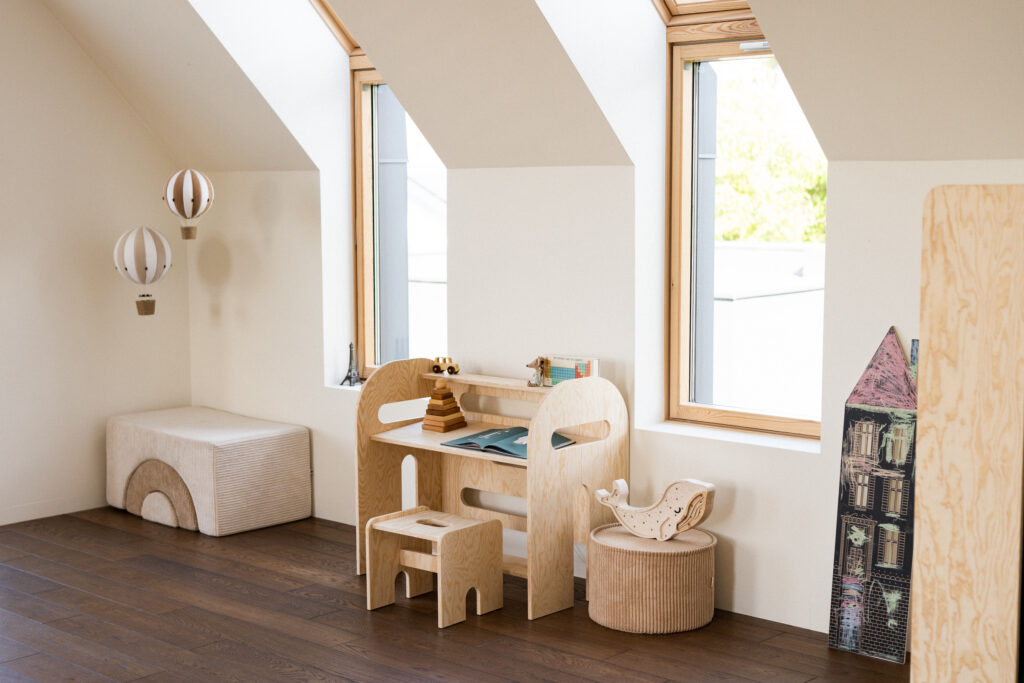
According to M. Montessori, it is very important that all objects and furniture in the room are adapted to the child’s height and abilities. The toddler should have free access to his or her belongings. For this purpose, it is worth choosing low shelves where the child can independently reach for toys, clothes or other everyday items. The furniture in the room should be simple, solid and aesthetic. This is extremely important in the process of learning independence and decision-making.
Simplicity, tidiness and space
Minimalism is an important principle in the arrangement of a Montessori room. Too many toys or decorations can overwhelm a child and make it difficult for him to concentrate. It is worth limiting the number of items to those that actually support the child’s development at a given stage. Toys should be well displayed and stored in an orderly manner, e.g. in baskets or on shelves. This order makes it easier for the child to make independent decisions, choose toys and clean up after playing. It is worth not cluttering the toddler’s room with too many objects – the child must have adequate space to play freely.
Natural materials and colors
In the Montessori tradition, great importance is attached to the use of natural materials and colors. Subdued colors will not additionally overstimulate the child in an already stimulating world. Wooden furniture, toys made of natural raw materials (e.g. wood, cotton, linen) – all this helps the child develop their senses in contact with friendly, ecological materials. By choosing such items, we not only support the child’s sensory development, but also teach them respect for nature. It is important that the room’s decoration is harmonious and aesthetic. Another interesting solution is to place elements of art in the room, e.g. reproductions of paintings or handmade decorations. Children learn through observation and contact with beauty.

Thematic zones
A Montessori room should be divided into different zones that correspond to the child’s different activities and interests. It may be, for example, a reading corner with a comfortable armchair or mattress and a shelf with books, or a play zone with blocks or other educational toys. A creative corner is also important – with art materials, e.g. crayons, paints or plasticine. Such zones will help your child develop the ability to independently organize time and play.
Toys supporting development
In the spirit of Montessori, a child’s room should stimulate development, but in a thoughtful and unobtrusive way. Toys should be simple, natural and diverse in texture, shape and color. It is worth choosing items that develop motor coordination, fine motor skills and creativity – e.g. wooden puzzles, blocks or sorting materials. It is also good to place a mirror in the room at the child’s eye level, which will help him observe his own movements and develop body awareness.

Decorating a child’s room according to the Montessori trend is a process that requires a bit of planning and prior thought. The most important principles are adapting the space to the child’s needs, ensuring order and minimalism, as well as supporting sensory and motor development through the appropriate selection of toys. A room organized in this way promotes independence, develops creativity and shapes the child’s organizational skills, while creating a harmonious and aesthetic environment.
Tekst: Marcelina Paszyńska
Photos: Monika Ratajczak @moniratajczak


